
Airport drop off charges in England: 2026 driver's guide
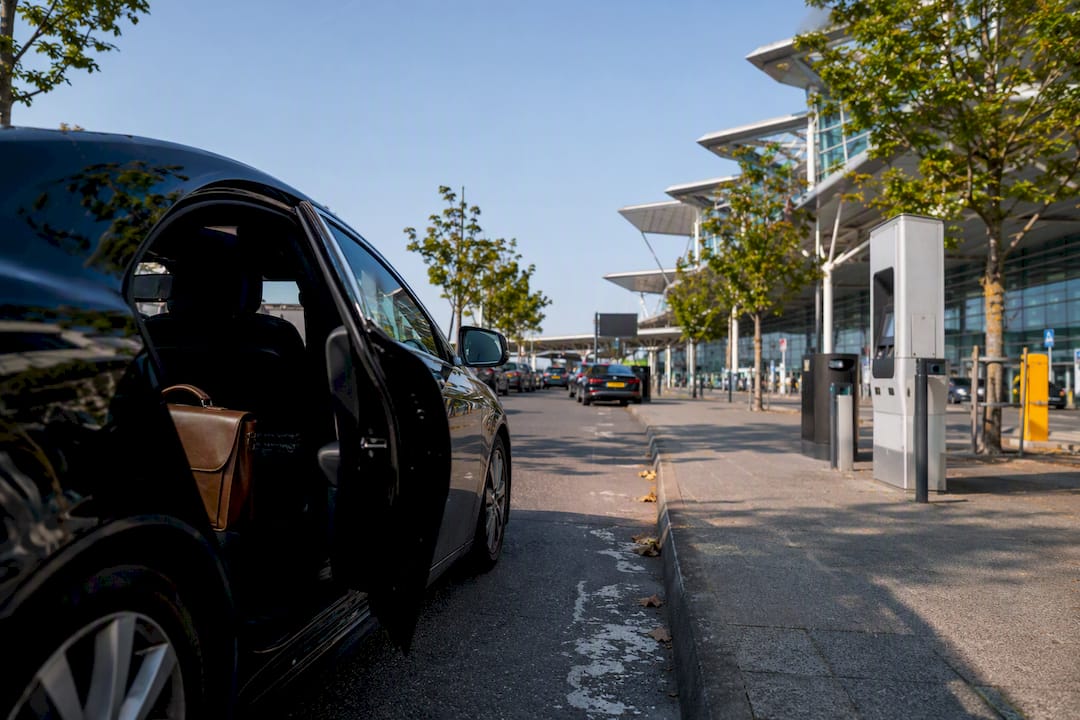
Drop off a passenger at most English airports today and you’ll likely pay somewhere between £5 and £10. A handful of regional airports still let you stop for free, but London’s big hubs now charge close to the top of that range, and Gatwick and Stansted can hit £10 for a short kerbside stop. The one thing to do before you drive off: check the airport’s payment portal and pay before midnight the following day, because there’s no barrier and no ticket to remind you.
- Typical range: £0 to £10 depending on the airport
- Deadline: usually midnight the day after your visit
- Miss it: you risk a Parking Charge Notice, often £80 to £100
Pro Tip: Set up AutoPay or a phone reminder the moment you park up outside the terminal. It takes thirty seconds and it’s the cheapest insurance you’ll buy that day.
Key Takeaways
Airport drop-off charges in England typically run £0 to £10 per visit, and paying via the airport’s online portal by midnight the next day is the single action that avoids a Parking Charge Notice.
| Point | Details |
|---|---|
| Prices vary sharply by airport | Heathrow charges — per visit; Gatwick and Stansted charge up to £10 for short kerbside stays. |
| No grace period once tracked | ANPR cameras start the clock at the zone entry line, not when you park up. |
| Pay by midnight next day | Missing this deadline typically triggers a PCN of £80 to £100, often reduced if paid within 14 days. |
| Free alternatives exist | Long-stay or park & ride facilities with shuttles let you dodge the fee for a 5 to 25 minute transfer. |
| Fixed-fare transfers remove the risk entirely | Phoenix offers fixed-fare airport transfers from Gainsborough, Lincoln, and Scunthorpe with no drop-off charge surprises. |
Table of Contents
- How do airport drop off charges actually work?
- What do UK airports charge for drop off in 2026?
- How and when do you pay an airport drop off charge?
- Who’s exempt from airport drop off fees?
- How can you avoid paying a drop off fee?
- What happens if you don’t pay, and can you appeal?
- Quick checklist before you drive to the terminal
- Frequently asked questions
- Sources
How do airport drop off charges actually work?
There’s no barrier to lift, no ticket machine, no attendant waving you through. Instead, automatic number plate recognition (ANPR) cameras log your car the moment it crosses into the charging zone, and again when it leaves. That gap becomes your bill.
This catches people out because it feels like there should be a grace period, the way multi-storey car parks give you ten minutes to find your bearings. There often isn’t one. Once the camera reads your plate at the threshold, the clock has started, and ANPR-based drop-off zones treat that first read as the start of your visit regardless of how quickly you actually pulled away again.
- Cameras sit at the entry and exit points of the forecourt, not at a barrier.
- “Entering” means crossing that camera line, not parking up.
- Typical free or included windows run 5 to 15 minutes, then charges apply per minute or in bands.
- Payment is usually due by midnight the next day, whichever airport you used.
- Yellow road markings and signage usually flag the exact zone boundary, so read them before you stop.
Pro Tip: Build in extra time for congestion. If the forecourt is backed up and you’re crawling at walking pace for ten minutes before you even reach the terminal, that time is still running against your allowance.
What do UK airports charge for drop off in 2026?
Prices vary more than most drivers expect, and they’ve moved sharply. RAC analysis reported by the BBC found drop-off fees rose by roughly a third across UK airports, with Gatwick and Stansted now among the priciest for a short kerbside stay.
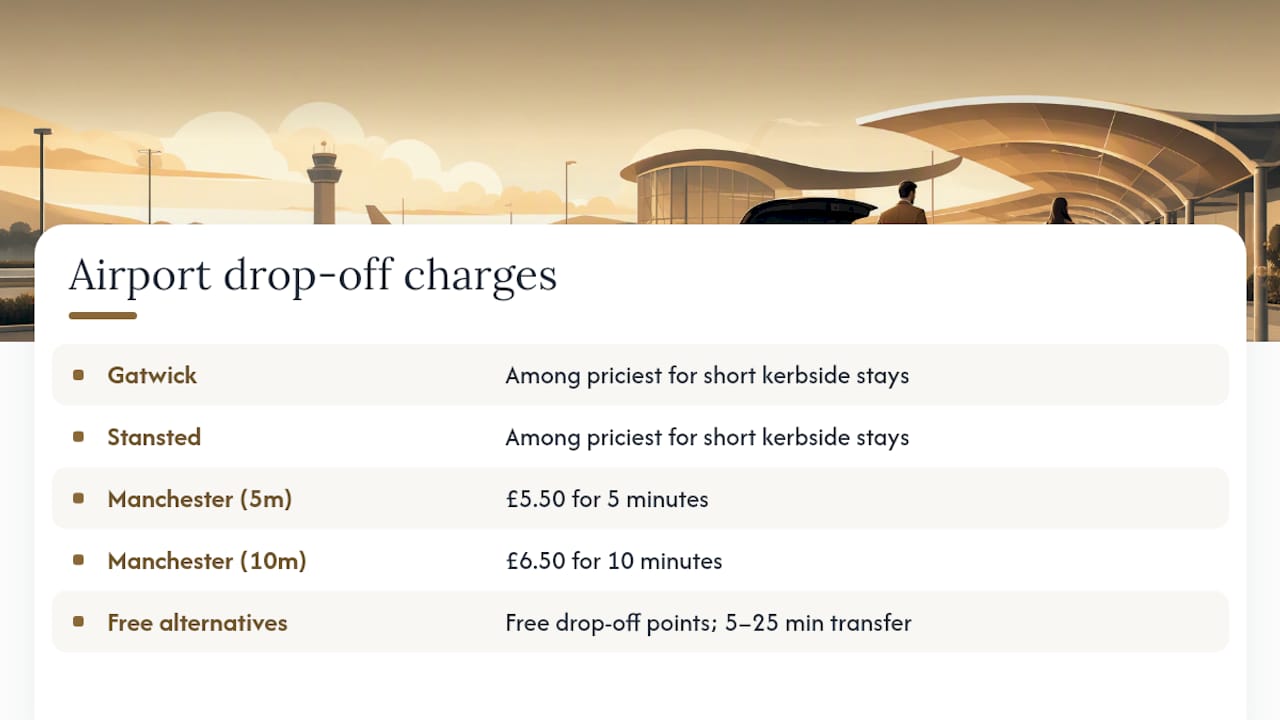
Manchester’s tiered pricing is worth noting on its own: five minutes costs £5.50, but stretch to ten and it’s already £6.50, and longer overstays climb further from there.
Almost every airport still offers a free workaround. Long-stay and mid-stay car parks typically run shuttle buses, and free alternative drop-off points exist at most sites for drivers willing to accept a five to twenty-five minute transfer. The trade-off is obvious: you save the fee but lose the convenience of pulling right up to the doors.

Prices at every airport are subject to change without much notice, so treat the figures above as a starting point and check the official portal before you travel.
How and when do you pay an airport drop off charge?
You can’t hand over cash at the kerb. Every major airport routes payment through an online portal, an app, or a phone line, because the whole system runs on number plate recognition rather than tickets.
- Pay via the airport’s own website or app immediately after your visit.
- Some payment operators, including APCOA and Times24, handle collections on behalf of several airports.
- AutoPay lets you register your number plate and card in advance, so future visits bill automatically.
- The deadline at most airports is midnight the day after your visit, not the same day.
Miss that window and the system escalates straight to enforcement. Most airports using ANPR issue a Parking Charge Notice once the deadline passes, and PCN amounts commonly reduce to around £60 if you settle within 14 days of the letter arriving.
Who’s exempt from airport drop off fees?
Blue Badge holders often get free or discounted drop-off, but the rules aren’t uniform. Some airports need you to register your badge details in advance through their accessibility team rather than assuming the camera will simply recognise your entitlement.
- Blue Badge holders: check the specific airport’s accessibility page before travelling, since pre-registration is sometimes required.
- Airport operational vehicles and licensed service vehicles are generally exempt as a matter of course.
- Taxis and private hire vehicles aren’t automatically covered. Some operators build the charge into the fare; many don’t, and it lands on the passenger separately.
Pro Tip: If you’re a Blue Badge holder, carry the physical badge and any registration confirmation email. Camera systems can misread plates, and a paper trail settles any dispute fast.
How can you avoid paying a drop off fee?
The most reliable route is the one every consumer guide converges on: use the free long-stay or mid-stay car park and take the shuttle. It costs you time, not money, and most services run every 10 to 15 minutes.
- Park in a free long-stay or park & ride facility and expect a 5 to 25 minute shuttle or walk to the terminal.
- Look for free drop-off points slightly further out. Some airports mark these clearly; others require a bit of local knowledge.
- Consider a pre-booked, fixed-fare transfer that states upfront whether airport charges are included, removing the guesswork entirely.
- Weigh the maths honestly: a £10 kerbside fee against a 20 minute shuttle ride is a fair trade for someone running late, and a poor one for someone with plenty of time to spare.
What happens if you don’t pay, and can you appeal?
Ignore the invoice and the airport’s system doesn’t forget. A Parking Charge Notice typically follows by post, and most examples of PCN ranges sit between £80 and £100, with Heathrow specifically issuing an £80 charge reduced to £40 if you pay early.
The sequence usually runs: missed deadline, PCN issued by the airport’s collections partner (often Times24 or APCOA), then a window to pay the reduced rate or lodge an appeal. Appeals go through the same agent that issued the notice, not the airport directly.
- Screenshot or photograph your arrival and departure, including timestamps, if you can.
- Keep any dashcam footage; timestamps matter more than the footage itself.
- Bank statements showing an attempted or completed payment help if the charge went through late or failed silently.
- Act within the stated window. Most reduced rates expire after 14 days, after which the full amount applies.
Quick checklist before you drive to the terminal
- Check the airport’s official drop-off page for the current fee and time window.
- Decide now: pay immediately after your visit, or register for AutoPay beforehand.
- Set a phone reminder for the midnight-next-day deadline.
- Blue Badge holder? Confirm registration requirements first. Booking a taxi? Ask outright whether the charge is included.
Pro Tip: Screenshot the airport’s current pricing page before you travel. Rates change with little warning, and having proof of what you saw protects you if a dispute ever arises.
Why do airports charge for drop off at all?
Airports UK frames these fees as congestion and air-quality management, not simple revenue-raising, aiming to push short “kiss and fly” trips towards shuttles and public transport. England’s approach is notably more widespread than many EU hubs. For readers here, it’s really a nudge towards planning the journey, not just paying at the door.
A fixed fare beats a forecourt gamble
Driving yourself means juggling ANPR windows, portal logins, and a midnight deadline you might forget the moment you land at baggage reclaim. Phoenix removes that entirely: a fixed fare agreed before you travel, live flight tracking so your driver adjusts to delays, and a meet-and-greet service with DBS-checked local drivers who know Lincolnshire’s roads properly.

Phoenix runs regular routes from Gainsborough, Lincoln, and Scunthorpe to the major airports, including transfers from Gainsborough to Heathrow and from Gainsborough to Birmingham Airport. No kerbside camera to worry about, no portal to log into after landing, no risk of a PCN landing on your doormat weeks later. If you’re near Knaith and heading to Luton, the Knaith to Luton route works the same way: one price, agreed upfront, covering the whole journey. Get a quote for your route and book your transfer before your next flight.
Frequently asked questions
Is there a free way to drop someone off at a UK airport? Most airports offer a free option in long-stay or mid-stay car parks with a shuttle bus, though you’ll usually need to allow 5 to 25 minutes extra travel time.
Do taxi fares include the airport drop off charge? Not automatically. Some operators build it into the fare and some don’t, so always confirm before you book, or choose a fixed-fare service that states clearly what’s covered.
What happens if I forget to pay the drop off fee? You’ll typically receive a Parking Charge Notice by post, often £80 to £100, sometimes reduced to around £60 if you pay within 14 days.
How long can I stop without being charged? It depends on the airport, but most include five to fifteen minutes before charges apply, and some charge a flat minimum regardless of how briefly you stop.
Are Blue Badge holders exempt from drop off charges? Often, yes, but several airports require you to register your badge in advance rather than relying on the camera to recognise it automatically.
Sources
- Airport drop-off fees up by a third - here are the priciest (BBC)
- Terminal Drop-Off Charge | Heathrow
- UK Parliament research briefing — airports and air travel (CBP-10454)
Recommended
Topics in this guide
Related guides on the blog
All travel guides- Taxi Lincoln to Gatwick Airport: Comfortable Long-Distance TransfersNeed a taxi Lincoln to Gatwick Airport that skips the train changes? Phoenix Travel runs fixed-price, pre-booked long-distance transfers with DBS-checked drivers and flight monitoring.
- Lincoln 8 Seater Airport Transfers: Seats and LuggageA practical load-planning guide to Lincoln 8 seater airport transfers — how to work out whether eight seats really means eight passengers once luggage, car seats or golf bags are added, and how to nominate one booking contact for the group.
- Lincoln Airport Transfer Cancellation Questions: A Before-Booking ChecklistBefore you confirm a pre-booked Lincoln airport transfer, work through these cancellation, amendment and notice-period questions so a flight change or cancelled booking doesn't catch you out on travel day.
- Lincoln Multi Stop Airport Transfers: Planning PickupsA practical guide to booking one Lincoln multi stop airport transfer across several household pickups, covering addresses, stop order, luggage and quote changes.